



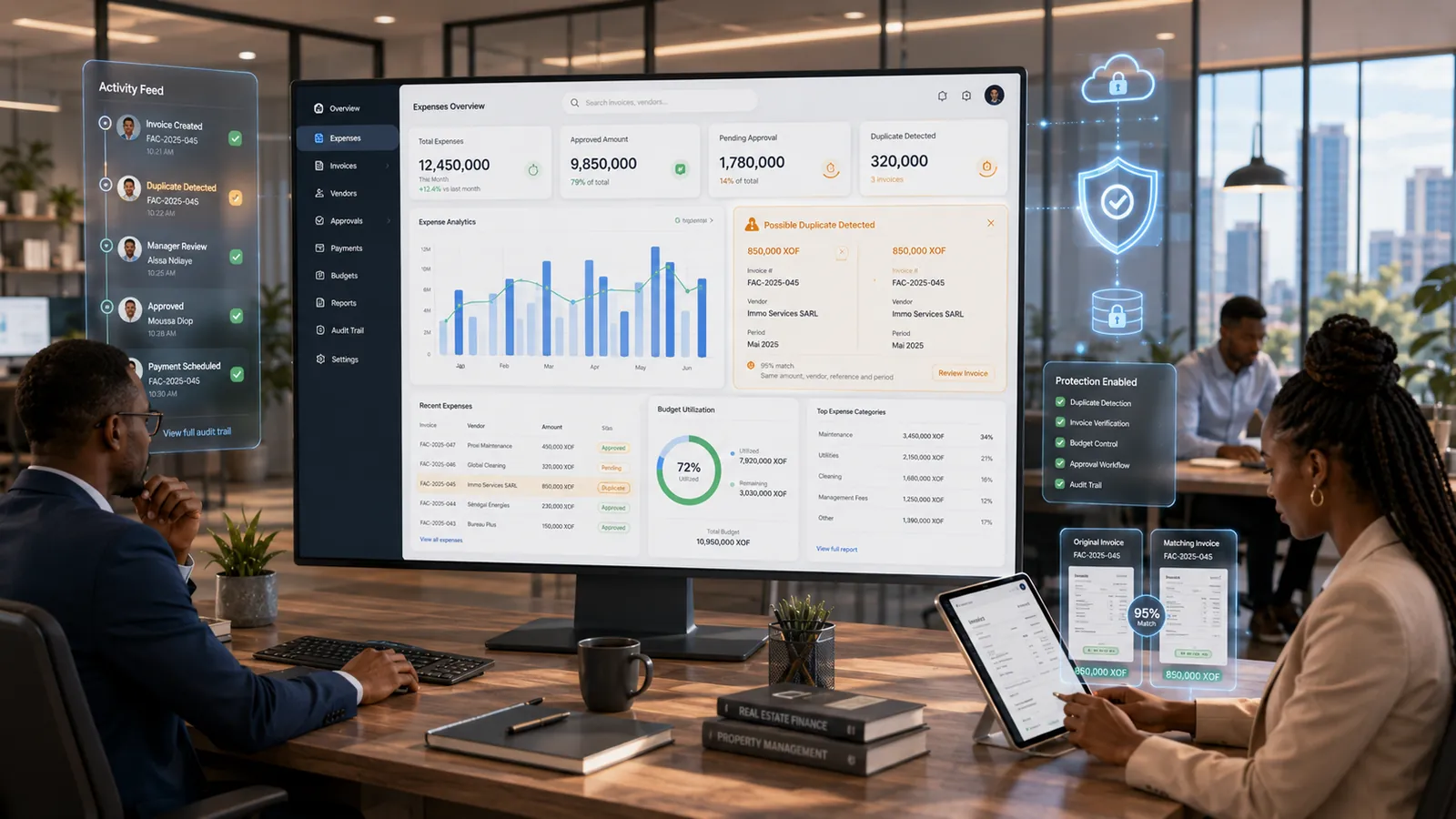
In property management, money does not only leak through unpaid rent. It leaks through spending too: an invoice settled twice, the same cost entered by two people, a supplier paid twice over. Those losses are silent, and over a year they add up.
How duplicates happen
Most often with no bad intent at all: an invoice is entered, then entered again because nobody saw it was already there. Or a document arrives through two channels (paper and email) and each one is processed. Multiply that by the number of costs across a portfolio and the risk becomes real.
When it becomes fraud
A duplicate can also be deliberate: an inflated invoice, a fictitious supplier, the same document presented twice to be reimbursed. Without a check, those patterns go unnoticed for as long as nobody cross-references the spending by hand, which nobody has time to do.
An automatic check changes things
A system that compares invoices against each other (same amount, same supplier, same period, same reference) surfaces likely duplicates before payment. That is not an accusation, it is a flag, so a person can check. The mere existence of the check already deters attempts.
Traceability as the safety net
Beyond detection, every entry and every approval has to leave a trail: who recorded the invoice, who paid it, and when. That audit log is not surveillance, it is protection, for the agency and for honest staff, who can prove they acted in good faith.
In short
Making your spending safe is worth as much as recovering your rent. Have duplicate invoices spotted automatically, keep a record of every action, and you close a door money was quietly walking out of.
Also worth reading


Ready to start?
Turn the reading into practice
Put your first block online during the 14-day free trial.